
Hurry Up and Do Good! СПЕШИТЕ ДЕЛАТЬ ДОБРО !
By Stephen Wilson, one of our reporters abroad
Street helpers and social workers will relate to these important examples of those who have helped the needy. Sometimes in magical ways, other times simply through their hard work, there have always been people who go out of their way to provide food and medicine and care. Doing good is a strong drive for many of us, and many in the past.
"Hurry, hurry up!" I told myself. So once again I went on a quest to find the memorial of a linguist who had taken Doctor Haas's motto of 'Hurry up and do good' with pure sincerity. Before I embarked on this search, I, and another colleague had made two attempts to try and find the small memorial to an academic called Irina Aleksandrovna Yershova who had died in 2003. She had lectured at Moscow State University and assisted many students as well as visiting a student struck down by mental distress in hospital. She is fondly remembered by students.
The Russian teacher of English Oksana Cherbotareva told me:
"She was the best. She was very nice and helpful. Once I was absolutely disorientated doing my studies. I was having difficulties translating some ancient languages into Russian. My supervisor did not help me, but she did and I finally learnt to do this task very well. She took care of me and gave lessons for free. One young student who fell ill with schizophrenia was hospitalized. She visited him and gave him food. She also arranged for other students to take turns in visiting him. This was important because this student was not from Moscow but outside and so had no family to immediately help him."
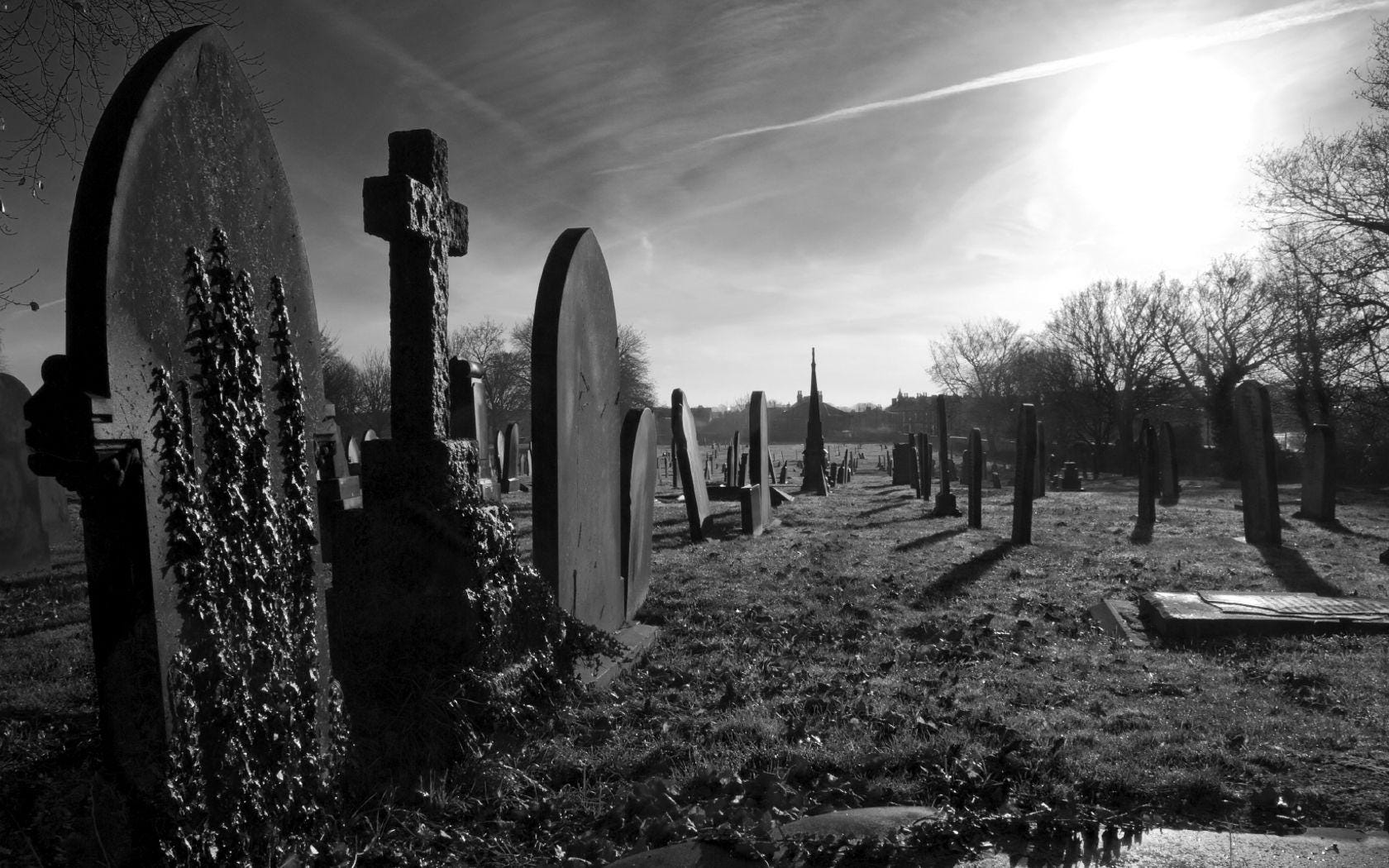
Her memorial is in what is called the German Cemetery. But it is also named the 'Basurmanskikh sklepov ' which rendered into English means the Mongol Tartar Crypts. The official name of the graveyard is the Vvedensky Cemetery. It was the traditional graveyard where foreigners of different religious confessions were buried. In 1771, it was where victims of the plague were also buried. But now you can find the graves of all kinds of people with different confessions. French soldiers of the war of 1812 lie buried here as well as the remains of a French pilot who died during the Great Patriotic War who served in the legendary Normandie -Niemen squadron. Patrick Gordon, a Scot, and boon companion and general who served Peter the Great is buried here.
When I arrived in the German Cemetery, I was at least informed by officials that Irina's grave was in plot 71. As I made my way there, the sky erupted in thunder and heavy rain came pounding down. I had to take shelter under the roof overlooking a grave. Lightning flashed through the air. I felt uneasy. It dawned on me that trees were everywhere in this graveyard and it resembled a dense forest. I found myself facing the grave of a young girl who had died at the tender age of just four. Her name also turned out to be Irina. After the rain stopped, I set out once more on my search. But I failed to find it. I resolved to look later as the weather was too stormy. That very day I heard tragic news from Oksana. Her neighbour Olga was very upset to tell Oksana how her 27-year-old nephew had died in a train accident. And just shortly before Oksana had to attend a church memorial service to a fellow member of the church who had died at 35 in his sleep.
One week before that, we had both visited the Tretaikov Gallery. While we were looking at a picture and speaking, a Russian artist who overheard us asked me “Is it not tragic how this artist you are looking at died at 67 and another great artist over there died at 23? It is a strange contrast of fate. Inexplicable." {He was comparing the fate of Alexi Savrasov {1830-1897} and Feodor Vasilyev {1850-1873.} The artist with my permission quickly drew my portrait in a few minutes. The accuracy was striking. This was a real professional. The visit to the art gallery failed to live up to a lazy and leisurely Sunday. It was hardly escapism!

Similar things have happened to me and my family in Scotland. In fact, all kinds of bizarre legends abound! For instance, there is a grave which has an entrance to a huge underground catacomb, the ghost of Francis Lefort haunts this graveyard and a small boy is said to be playing a flute beside the grave of Doctor Haas {1780- 1853} during the early morning hours. But some famous graves appear to have been lost. Nobody can find them! Nobody can find the grave of Francis Lefort or James Bruce. And we could not find the memorial of Irina Aleksandrovna Yershova.
This was not the first time I have had problem finding graves. Twenty years ago, I and my family tried to find the grave of our great-grandmother. The caretaker of the cemetery did not know. They kept no records or maps of the graveyard in Dunfermline. The following day at home in Glasgow I was awoken by a scream from my mother. At first, I thought she had fallen from the bed and injured herself. But instead, she told us, “I saw a ghost." She had seen the figure {adorned in 19th century dress} of our great-grandmother standing by her bed. She had seen her ghost before on other occasions.
All those events forced me to at least meditate on death. And I wondered if the near prospect of death inspired the motto of Doctor Haas 'Hurry up and do good' which is inscribed on his grave. There seems something compelling, critical and desperate which resonates in those words. That is, if I don't reach my patient in time, he or she will die. That was certainly the pressure Doctor Haas felt. Doctor Haas was a doctor and reformer who sought to improve the lives of the poor, the sick and prisoners. He even invented a new pair of prison fetters which were light and soft and did not inflict any pain on prisoners. Before, prisoners were chained in iron fetters which pierced their flesh and left them in pain as well as inflicted scars. Haas campaigned to replace those chains with painless ones. He even tested his new fetters on himself to see if they worked well enough. Haas provided free medical care to patients as well as food, clothing and attention.
There is a story that once Haas was stopped by a gang of thieves. The thieves wanted to take his fur coat. Haas told them "If you take my fur coat, I can get a cold and die, and I won't be able to help the patients in my hands at the hospital. " When the doctor told him he would not denounce them to the police and that they were welcome to any hospital treatment if they asked for Doctor Haas, the thieves were taken aback. They asked him “Why didn't you tell us in the first place your name was Doctor Haas? We would never harm you." Instead, they provided him with a safe escort to the hospital.
It was in fact ex-prisoners who shifted the boulder now standing as a memorial to where Haas is now buried.
I think that not only Doctor Haas serves as a stirring inspiration to do good but so do the deeds of Irina Aleksandrovna Yershova. We have to finally find her memorial.
Life can be hard on the streets. So many people needing so much help, every day, in many lands. The poor, the homeless, the ill, and the masses wandering often without hope.
Indeed, we must “Hurry up and do Good!”